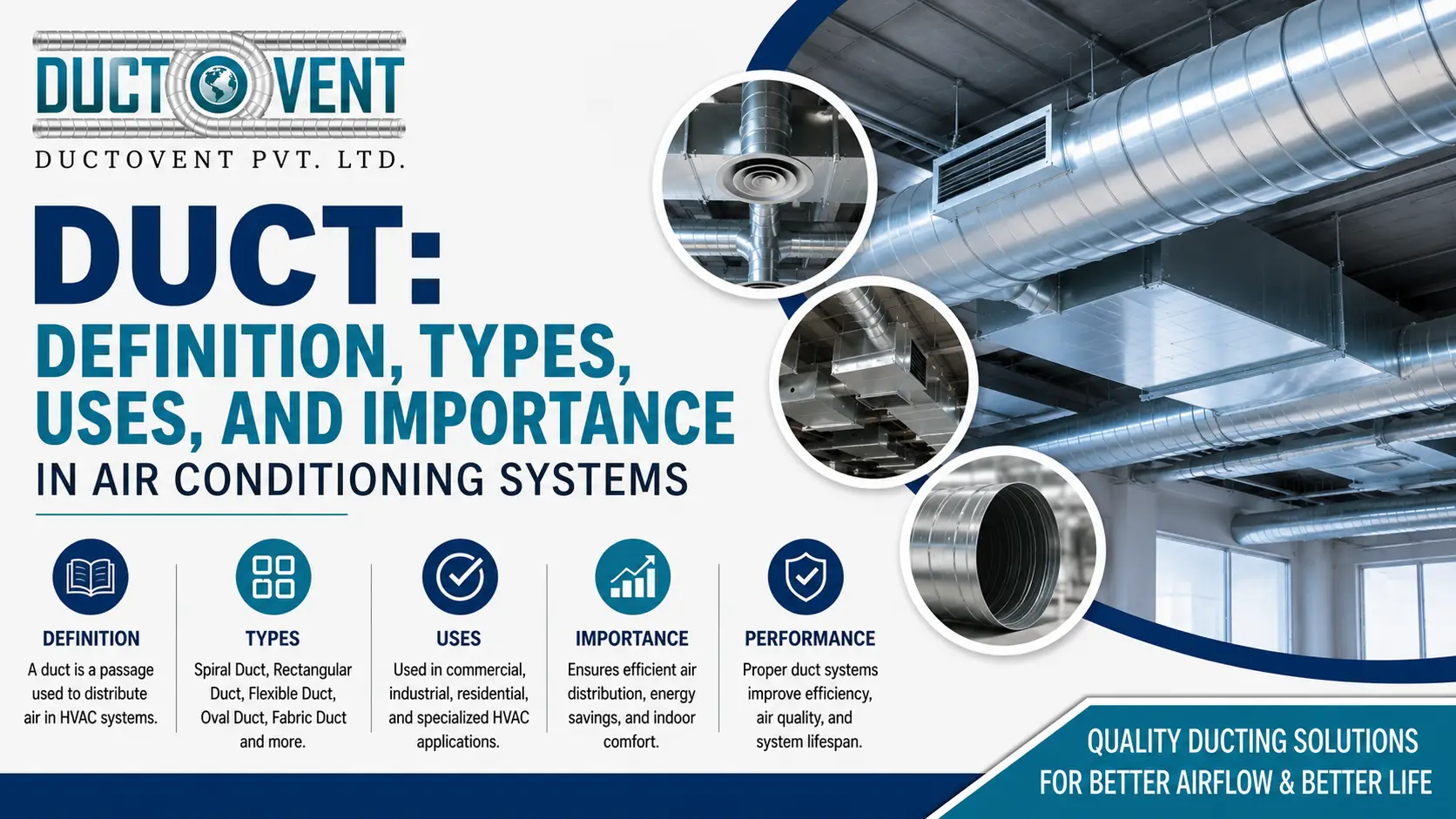
Air conditioning systems are designed to provide a comfortable indoor environment by controlling temperature, humidity, and air quality. One of the most important components of any HVAC (Heating, Ventilation, and Air Conditioning) system is the duct. Ducts are responsible for carrying conditioned air from the HVAC unit to different areas of a building and returning stale air for reconditioning.
What is a Duct?
Duct is an enclosed passage or channel used to transport air in HVAC and ventilation systems. It distributes cooled or heated air from the air handling unit (AHU) or air conditioner to different rooms while also returning indoor air back to the system for filtration and conditioning.
A well-designed duct system ensures:
- Uniform air distribution
- Better indoor air quality
- Improved energy efficiency
- Reduced operating costs
- Comfortable indoor temperature
How Does Ductwork Work?
A duct system works by moving air through a network of ducts connected to the HVAC unit.
The basic process includes:
- The air conditioner or AHU cools or heats the air.
- The blower pushes conditioned air into the supply ducts.
- Air travels through the duct network.
- Diffusers and grilles distribute air evenly throughout the building.
- Return ducts collect indoor air and send it back to the HVAC unit for filtration and recirculation.
Types of Duct
Flexible Duct
Flexible ducts are lightweight ducts made from flexible materials reinforced with wire coils. They are mainly used for connecting the main duct to air diffusers and vents. Their flexibility allows for quick installation in areas with limited access or complex layouts.
Insulated Duct
Insulated ducts are covered with thermal insulation to reduce heat gain or heat loss during air transportation. They also minimize condensation and help lower operating costs while improving the efficiency of air conditioning systems.
Fabric Duct
Fabric ducts, also known as textile ducts, are made from high-performance fabric materials that distribute air evenly throughout a space. They are commonly used in food processing plants, sports facilities, warehouses, cleanrooms, and manufacturing industries where hygiene and uniform airflow are important.
Stainless Steel Duct
Stainless steel ducts are designed for environments requiring superior corrosion resistance and hygiene. They are widely used in pharmaceutical plants, laboratories, hospitals, chemical industries, and food processing facilities where durability and cleanliness are essential.
Aluminum Duct
Aluminum ducts are lightweight, corrosion-resistant, and easy to install. They are commonly used in ventilation systems, commercial buildings, and specialized HVAC applications where weight reduction and long service life are important.
Materials Used for Manufacturing Ducts
Different materials are selected based on the application and operating environment.
Common materials include:
- Galvanized Iron (GI)
- Stainless Steel (SS)
- Aluminum
- Mild Steel (MS)
- Pre-insulated Panels
- Fabric Materials
Each material offers unique benefits such as corrosion resistance, strength, durability, and thermal insulation.
Components of a Duct System
A complete duct system consists of several components that work together for efficient air distribution.
These include:
- Main Duct
- Branch Duct
- Elbows
- Reducers
- Dampers
- Diffusers
- Grilles
- Volume Control Dampers
- Fire Dampers
- Flexible Connectors
- Access Doors
- Turning Vanes
How AC Duct Systems Actually Work
An AC duct system carries cooled or heated air from the HVAC unit to different rooms, ensuring uniform temperature and better indoor comfort. A blower fan pushes the conditioned air through the supply ducts, while return ducts collect indoor air and send it back to the HVAC unit for filtration and recooling. This continuous cycle maintains efficient airflow and improves indoor air quality.
Working Process:
- Supply Ducts: Deliver conditioned air from the HVAC unit to different areas of the building.
- Return Ducts: Collect indoor air and send it back to the HVAC system for filtration and reconditioning.
- Diffusers & Grilles: Evenly distribute air into rooms and help maintain balanced airflow.
Importance of Ducts in HVAC Systems
Efficient Air Distribution
Ducts ensure that conditioned air reaches every room evenly, maintaining consistent indoor comfort.
Improved Indoor Air Quality
Proper duct systems circulate filtered air while removing dust, pollutants, and stale air.
Comfortable Indoor Environment
Balanced airflow maintains consistent temperature and humidity levels throughout the building.
Noise Reduction
High-quality duct systems minimize vibration and airflow noise, creating a quieter indoor environment.
Longer HVAC Equipment Life
Efficient airflow reduces stress on HVAC equipment, extending the lifespan of the entire system.
Conclusion
Ducts perform important work of air conditioning and HVAC systems. They ensure efficient air distribution, improve indoor air quality, reduce energy consumption, and enhance overall comfort. Selecting the right duct type and maintaining it properly can significantly improve the efficiency and lifespan of your HVAC system.
If you are looking for reliable and high-performance ducting solutions, Ductovent Pvt. Ltd. offers premium-quality Spiral Round Ducts, Spiral Flat Oval Ducts, Rectangular Ducts, and customized HVAC duct systems designed to meet the requirements of commercial, industrial, healthcare, hospitality, and institutional projects.