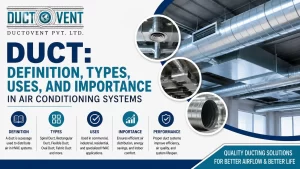
Duct systems play a crucial role in HVAC (Heating, Ventilation, and Air Conditioning) applications by ensuring the efficient distribution of air throughout residential, commercial, and industrial facilities. Right Duct system selection directly impacts airflow efficiency, energy consumption, indoor air quality, and overall system performance.
Different applications require different types of duct systems depending on factors such as installation requirements, space availability, operating conditions, and budget. Understanding the four major types of duct systems can help businesses and facility owners make informed decisions when designing or upgrading their HVAC infrastructure.
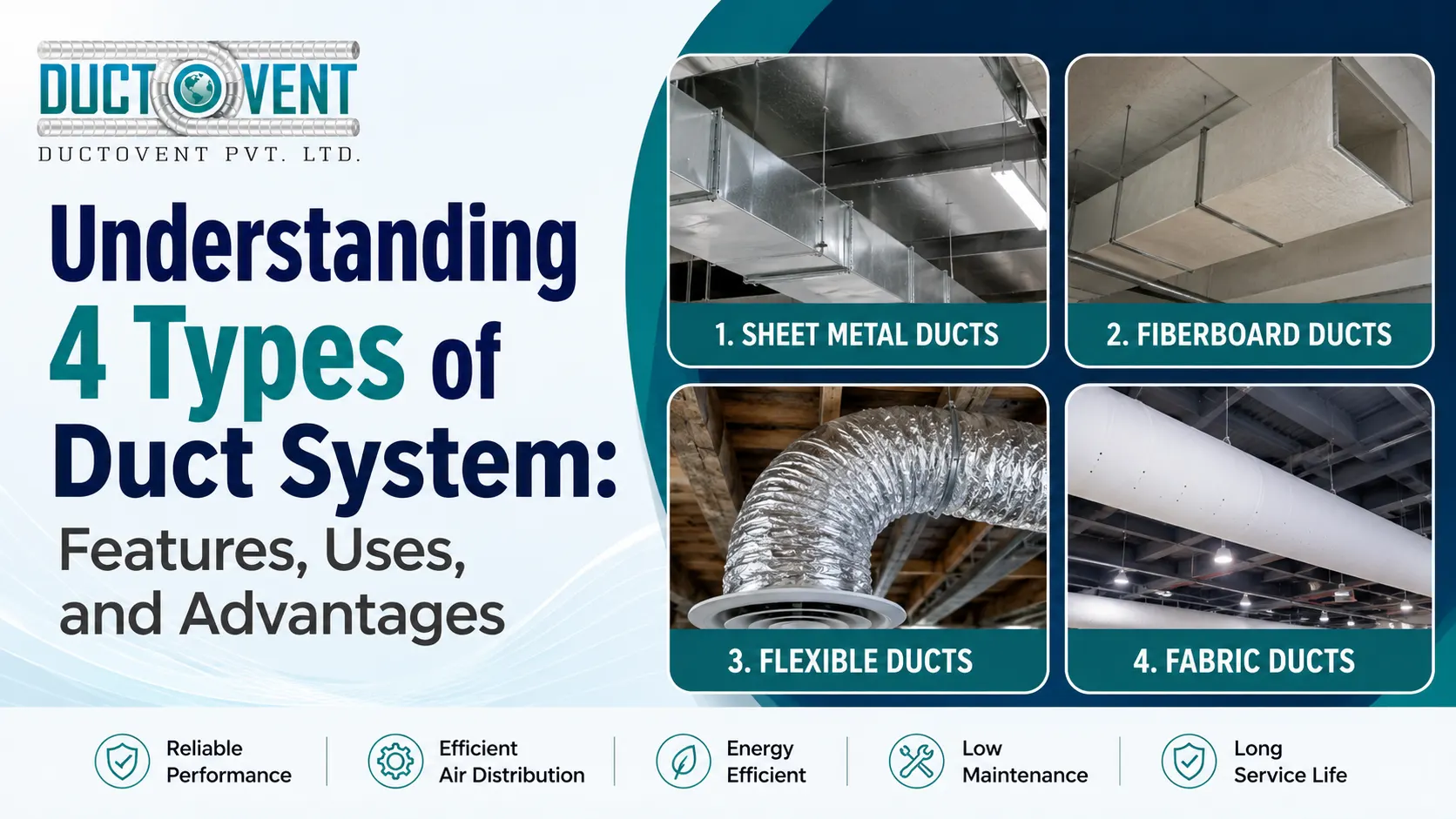
Different 4 Types of Duct Systems
1. Sheet Metal Ducts
Sheet Metal Ducts are one of the most widely used duct systems in HVAC applications for the efficient transportation and distribution of air. Manufactured from high-quality galvanized iron (GI), stainless steel (SS), aluminum, or mild steel sheets, these ducts are known for their strength, durability, and excellent airflow performance. They are extensively used in commercial buildings, industrial facilities, hospitals, shopping malls, and manufacturing plants.
Features
- Strong and durable construction
- Corrosion-resistant surface
- Suitable for high-pressure applications
- Long service life
Uses
- Commercial buildings
- Industrial facilities
- Shopping malls
- Hospitals and institutions
Advantages
- Excellent durability
- High structural strength
- Low maintenance requirements
- Reliable airflow performance
Fiberboard Ducts
Fiberboard Ducts are HVAC duct systems manufactured from compressed fiberglass boards with an insulating outer layer. These ducts are designed to provide efficient air distribution while offering excellent thermal insulation and noise reduction properties. Due to their lightweight construction and energy-efficient performance, fiberboard ducts are commonly used in residential, commercial, and institutional buildings.
Features of Fiberboard Ducts
- Lightweight and easy to install
- Excellent thermal insulation properties
- Effective noise reduction
- Smooth airflow characteristics
- Corrosion-resistant construction
Applications of Fiberboard Ducts
- Residential buildings
- Office complexes
- Educational institutions
- Healthcare facilities
- Hotels and commercial spaces
- Air-conditioned environments
Advantages of Fiberboard Ducts
- Reduced energy loss
- Improved HVAC efficiency
- Enhanced acoustic performance
- Easy handling and fabrication
3. Flexible Ducts
Flexible Ducts are lightweight and highly adaptable air distribution systems commonly used in HVAC applications. These ducts are made from a flexible wire coil covered with durable plastic and insulation materials, allowing them to bend easily around obstacles and fit into confined spaces.
Features
- Highly flexible design
- Lightweight structure
- Easy to route around obstacles
- Available with insulation
Uses
- Residential HVAC systems
- Renovation projects
- Small commercial applications
- Restricted installation areas
Advantages
- Quick installation
- Lower installation cost
- Space-saving design
- Suitable for complex layouts
4. Fabric Ducts
Fabric Ducts, also known as textile ducts, are air distribution systems made from specially engineered fabric materials. These ducts are designed to provide uniform airflow and improved indoor air quality while offering an attractive appearance.
Features
- Lightweight textile construction
- Uniform air distribution
- Customizable designs
- Easy cleaning and maintenance
Uses
- Food processing plants
- Warehouses
- Sports facilities
- Industrial manufacturing units
Advantages
- Improved indoor air quality
- Energy-efficient operation
- Attractive appearance
- Easy maintenance and cleaning
Reliable HVAC Duct type of Duct System:
Common HVAC duct types include Sheet Metal Ducts, Fiberboard Ducts, Flexible Ducts, and Fabric Ducts. Each type offers unique advantages in terms of durability, insulation, installation flexibility, and airflow efficiency.
Selecting the appropriate duct system depends on several factors, including building type, airflow requirements, environmental conditions, and project budget. Proper duct design ensures efficient air distribution, reduced energy consumption, and enhanced HVAC system performance.
Factors to consider include:
- Application requirements
- Airflow capacity
- Installation environment
- Maintenance needs
- Cost-effectiveness
- Energy efficiency goals
Ductovent PVT. LTD. – Trusted Duct System Solutions
Ductovent PVT. LTD. specializes in manufacturing high-quality HVAC duct systems designed to meet the diverse requirements of modern ventilation and air conditioning applications. Our duct solutions are engineered for durability, efficient airflow management, and reliable performance, making them suitable for a wide range of commercial and industrial projects.
With advanced manufacturing facilities, skilled professionals, and a commitment to quality, we deliver reliable ducting solutions that ensure efficient airflow, durability, and long-term performance.
Conclusion
Duct systems are essential components of any HVAC installation, ensuring efficient air movement and maintaining indoor comfort. Galvanized steel ducts, aluminum ducts, flexible ducts, and fabric ducts each offer unique features and advantages for different applications. Understanding these 4 duct types helps in selecting the most suitable solution for improved efficiency and performance.
For dependable and high-performance ducting solutions, Ductovent PVT. LTD. offers a comprehensive range of products designed to meet the evolving needs of modern HVAC systems.